 Mechanical Filming
 / blog / exploded views
What is an exploded view?
An exploded view pulls an assembly apart and holds every component suspended along the line it fits together on. Nothing is hidden behind anything else, and the order of assembly reads straight off the picture.
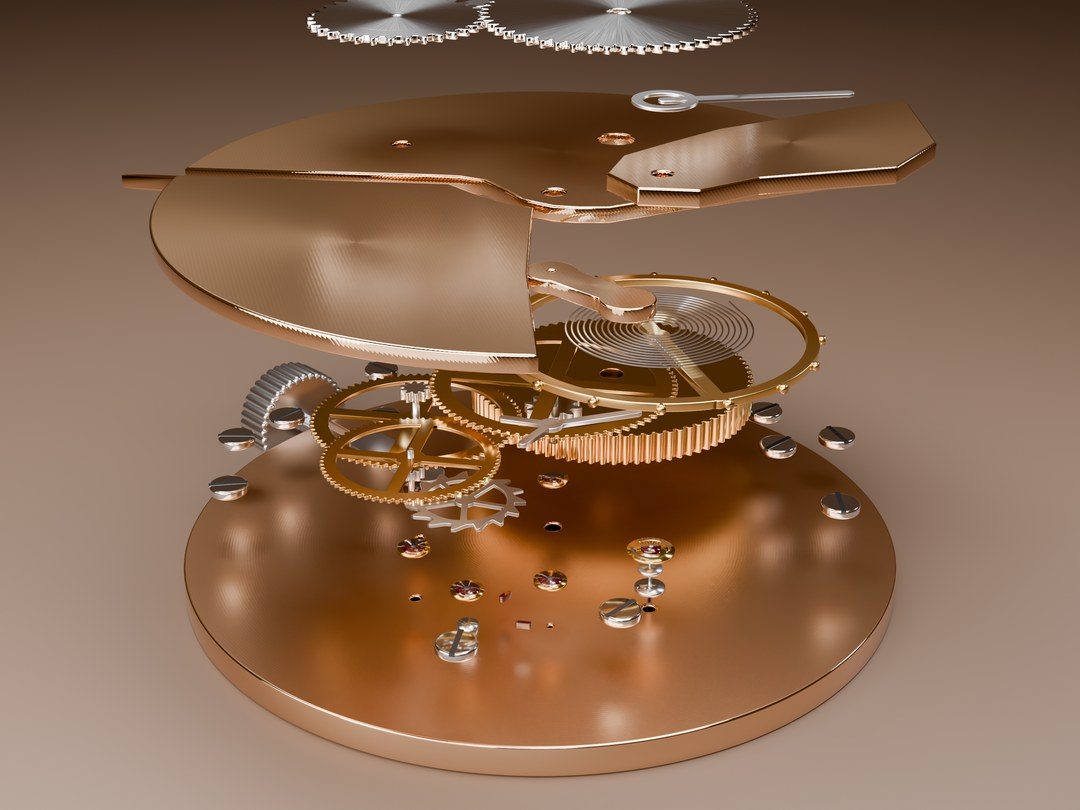
What makes it an exploded view
Three things separate an exploded view from a picture of some parts on a bench:
- Parts move along the axis they assemble on. A screw floats directly above its hole, not off to one side. The line a part travels tells you where it goes.
- Spacing follows the order of assembly. What goes in first sits nearest the body.
- Nothing overlaps. Every component is separately visible, which is the entire point.
Where they are used
- Service and repair manuals — so a technician sees the order to take something apart in.
- Parts catalogues — each component numbered against a parts list, so a buyer orders the right one.
- Assembly instructions — the flat-pack furniture diagram is an exploded view.
- Technical sales — showing the engineering a buyer is paying for but cannot see.
- Patents and documentation — where each element has to be identifiable.
Still image or animation?
A still exploded view answers what the parts are. An animated one answers how they go together, which is a different and usually harder question.
Use a still when the reader already knows the assembly and needs to identify a component — a parts catalogue is the clearest case. Use an animation when the order matters, when parts rotate or thread rather than simply lifting off, or when someone has to perform the assembly having never seen it before.
A useful test: if you find yourself writing a numbered caption explaining the sequence under a still image, the sequence is the real content, and it probably wants to move.
What makes a good one
- Correct geometry. If the part is modelled from the drawing, the view is usable for service work. If it is modelled by eye, it is decoration.
- Named parts. Every component carrying its own name and number means labels and callouts can be added to any frame without rebuilding anything.
- One clear reading direction. Parts flying in several directions at once is a diagram nobody can follow.
- Restraint. Exploding every sub-assembly at once produces a cloud. Explode the level the reader needs.
How we build them
We model from drawings, CAD or measured photographs, keep each part named to your own numbering, and deliver the view as a still, an animation, or both from the same model. Because the parts are separate objects rather than one frozen mesh, a second view from a different angle costs very little once the first exists.
More on the service: exploded view animation. What it costs: animation pricing.
Questions we get asked
Is an exploded view the same as a cutaway?
No. An exploded view separates the parts from each other. A cutaway keeps the assembly together and removes a slice of the outer body so you can see inside. They answer different questions and are sometimes used together.
Can you make one from a physical part with no drawings?
Yes. We measure from photographs and reconstruct the geometry. It takes longer than working from CAD and costs more, and anything estimated is flagged in the project notes.
Can the parts be numbered to our existing parts list?
Yes. Each component keeps your own part name and number in the model, so labels, callouts and catalogue numbering match the documentation you already use.
Can we get both a still and an animation?
Yes, and it is the usual request. Both come from the same model, so the second format is a fraction of the cost of the first.
Commissions open · request a quote
Tell us what moves.
Send the product, what it should show, and whether you want a film, an interactive piece, or both.
Related