Selected work
Mechanisms you can drive.
Not just films. Open any piece, turn it, click a part, run it. Every one is built the way a client job is built — from drawings, parts lists and measurements.
What these pieces show
Built from drawings, the same as your product.
The studies below are our own work: watch movements, and a device piece built from published open-hardware files. A movement is an unforgiving version of the same problem: dozens of small parts in constant contact, where a part in the wrong order shows up on screen immediately. The method moves straight across to a valve, a linkage, an enclosure or a device.
Read the source
Drawings, parts lists, measurements, CAD, or photographs of the part itself. We model from what you send, not from a guess.
Exploded views
Parts separated along the axis they are built on, in the order they go together, held so the eye can follow one at a time.
Assembly sequences
Stage by stage, each step showing what a part is for before it goes in.
Motion and callouts
How the parts drive each other, with names and numbers on screen where they are needed.
Client work is shown on request; some of it sits under NDA.
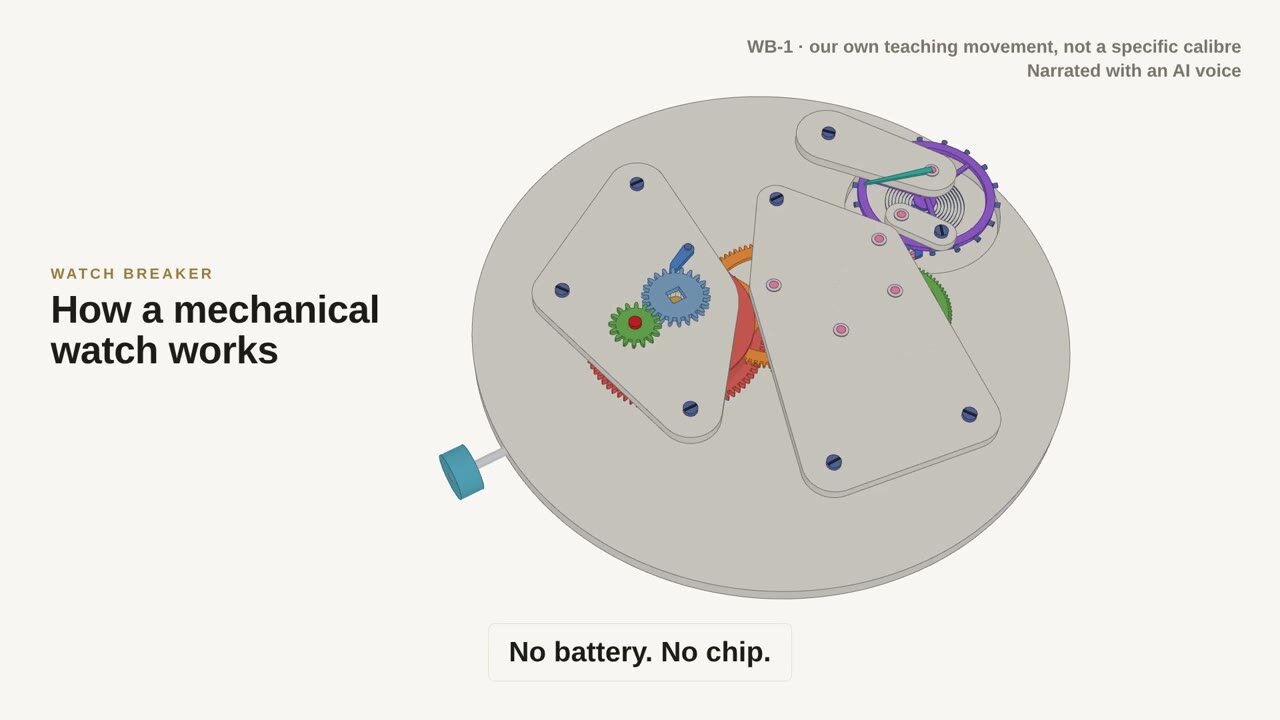
How a mechanical watch works
A 7-minute teaching film beside a live model of WB-1, our own teaching movement. Pick a chapter and the film jumps there. The model runs every part.
Watch and drive it →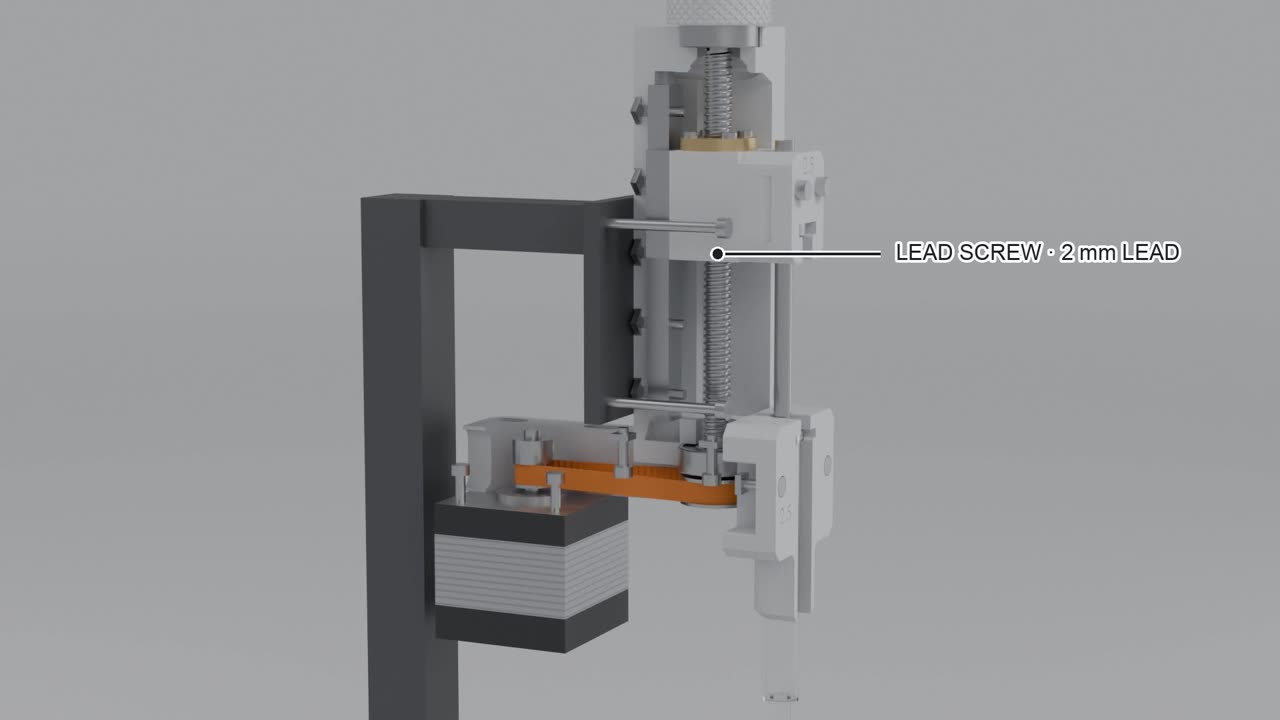
A syringe pump mechanism, from the engineering files
An open-hardware syringe pump mechanism in 46 seconds: turntable, exploded view, the belt drive up close and a labelled half-section. Motor to belt to lead screw to plunger, each part driving the next.
Watch it →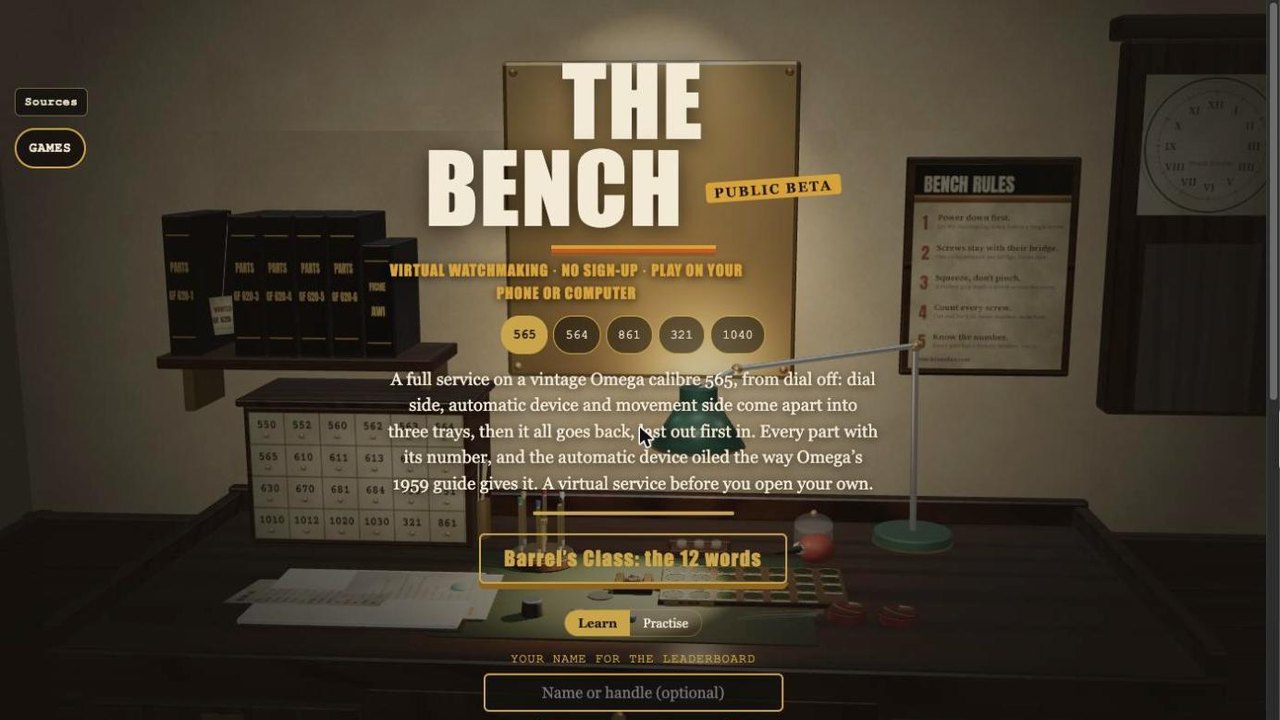
The Bench
A browser game built on an accurate model: strip a vintage movement to the last screw and build it back, every part named to its factory number.
Play it →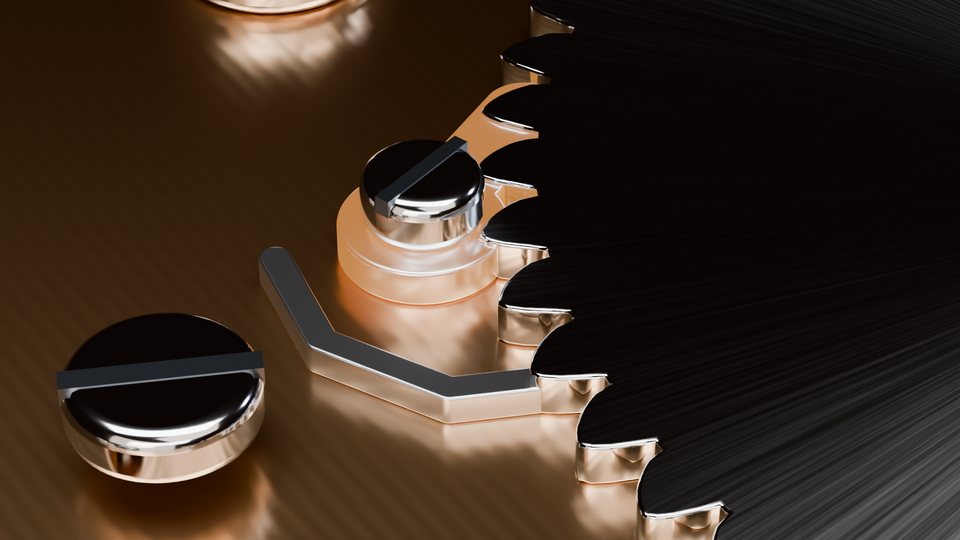
Calibre 266 keyless works, part by part
Fourteen parts from the crown to the click, each lit as it is named, with its part number on screen.
Watch it →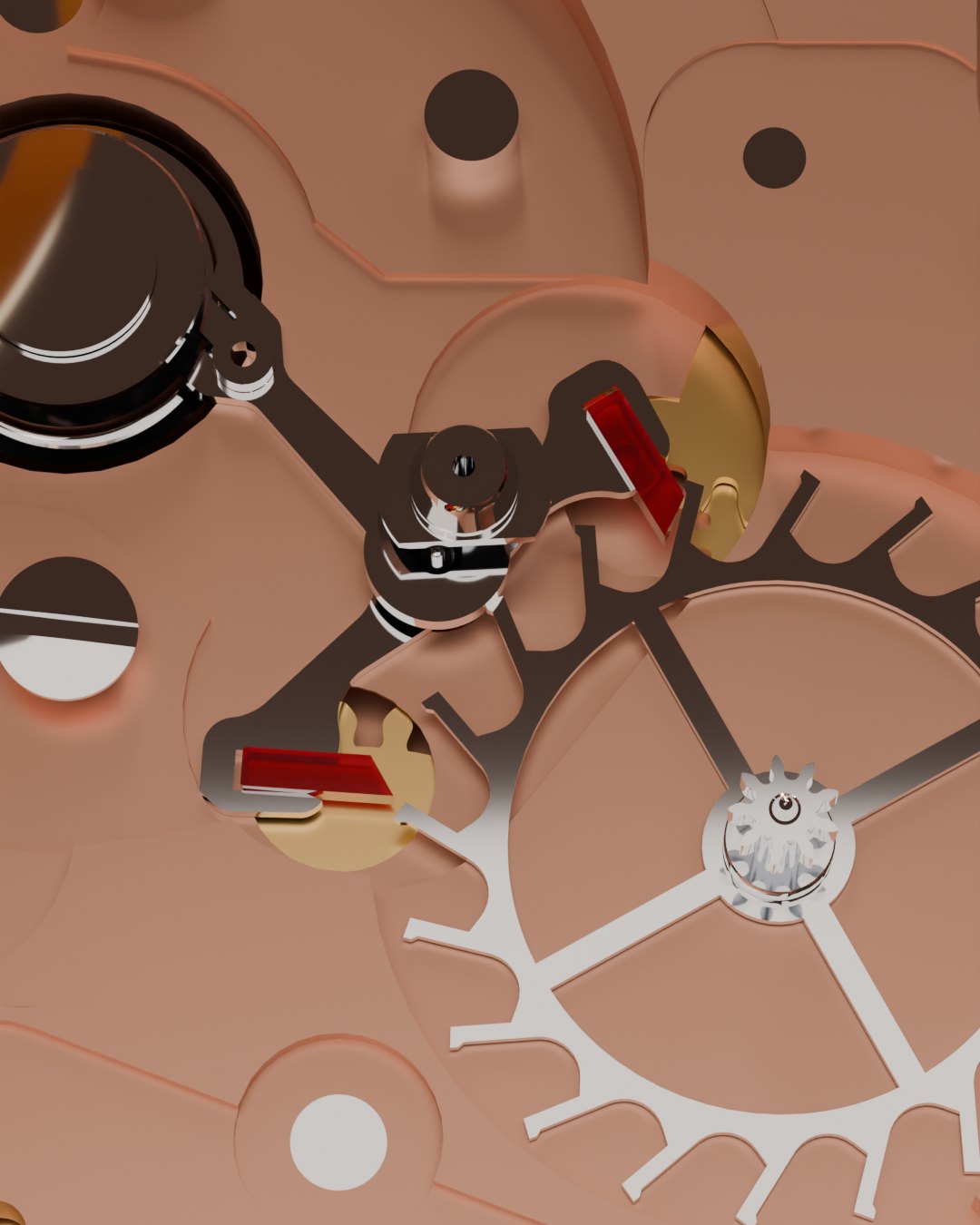
The hand-wound movement
Escapement, balance, mainspring, keyless works and timegrapher. Each one is live: drag it, slide it, pause it.
Open it →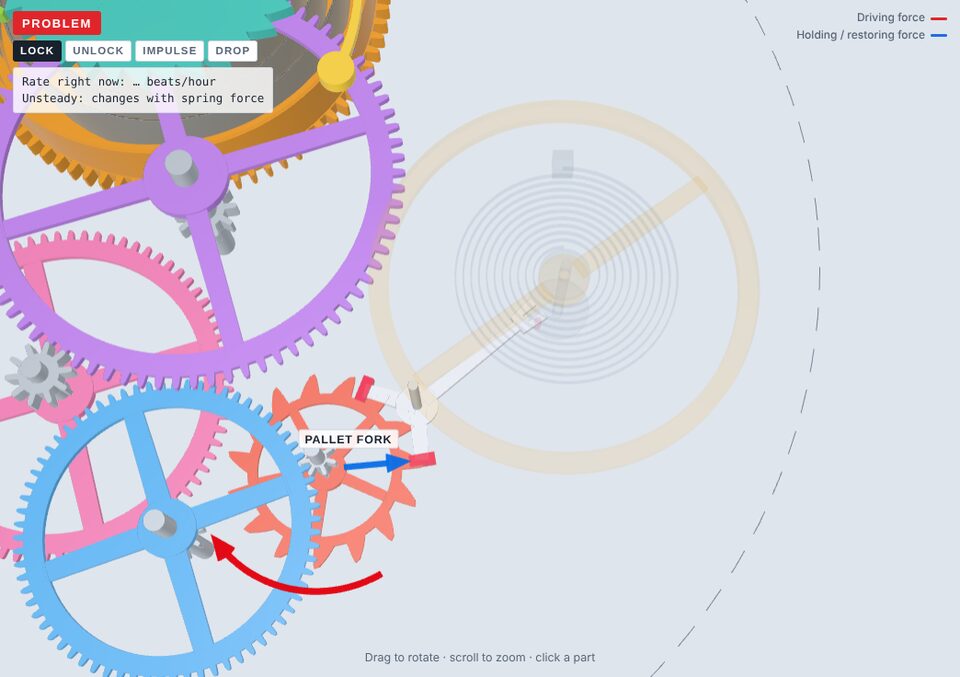
Calibre 266, built stage by stage
A vintage hand-winder in six stages. Each stage shows the problem, then the part that fixes it. Click any part for its name and number.
Open it →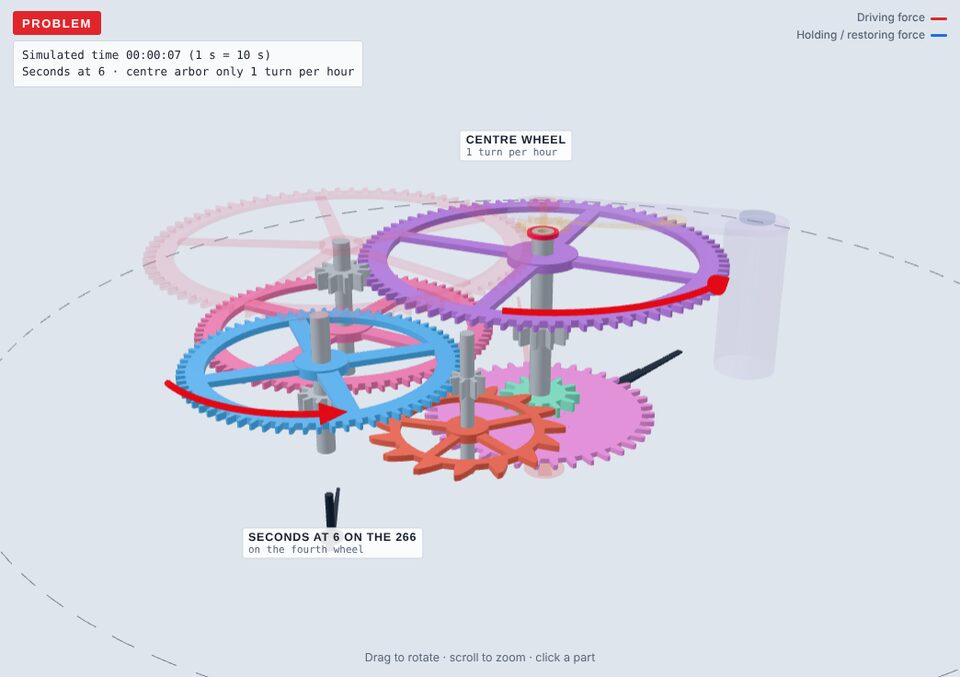
Calibre 283: centre seconds
The same base, plus one layer: how the seconds hand moves from 6 o'clock to the centre.
Open it →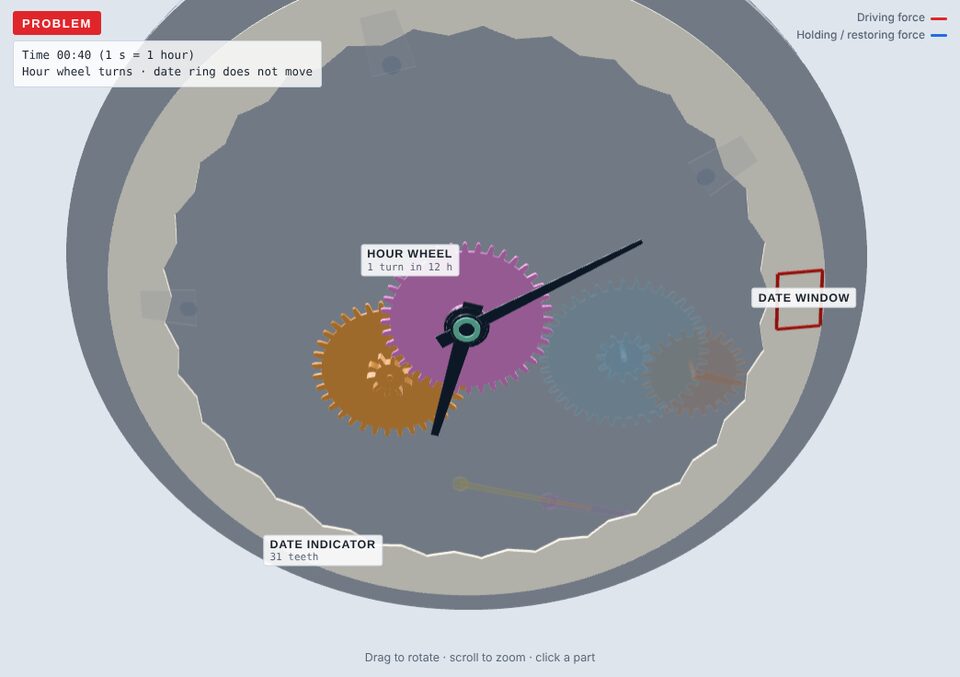
Calibre 610: the date
The dial-side calendar work: one turn a day, one date a night, held still in the window.
Open it →Syringe pump piece: 3D render, not a photograph. Mechanism: Allstruder open syringe pump by Thomas Hinton and Riley Patten (2024), CERN-OHL-P v2, github.com/hintonthomas/Allstruder. Animation and added geometry by Mechanical Filming. Source design notice: Copyright Thomas Hinton, Riley Patten 2024, licensed under the CERN-OHL-P v2; source files at github.com/hintonthomas/Allstruder. The source is offered by its authors without warranty, and they have not reviewed or endorsed this film. It illustrates a mechanism and makes no clinical or regulatory statement.
Calibre studies are our own 3D drawings for teaching. Part numbers come from the maker's published parts lists; tooth counts and layout are illustrative. Not affiliated with Omega SA; Omega is a trademark of Omega SA, used only to name the calibres. Educational only, not a service manual. Narration in the film is an AI voice.
Commissions open
Want one of these for your product?
Send the drawings or the part, what it should show and where it will run. We reply with a plan and a quote.
hello@mechanicalfilming.com